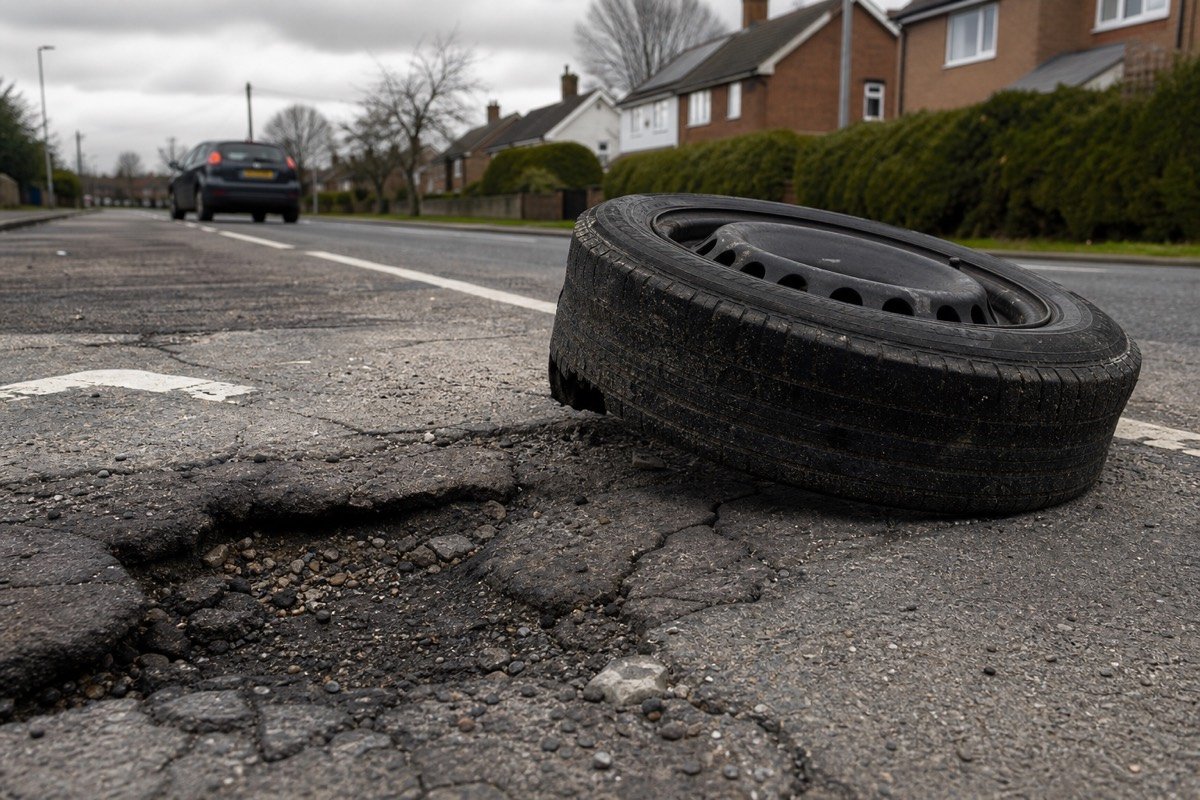
You hit a pothole. You hear the thud. A few miles later your steering feels wrong, or worse — you're sitting on the hard shoulder with a blown tyre. Then you find out the damage bill is £320. Your insurer tells you it'll cost you your no-claims bonus to claim. Sound familiar?
What most drivers don't realise is that your local council — or Highways England for motorways — is legally obligated to maintain roads to a safe standard. If they knew about the pothole (or reasonably should have) and failed to repair it, they are liable for your damages. The process is called a Section 41 claim, and it works.
Step 1: Document Everything at the Scene
Before you move your car (if safe to do so), take photos of everything: the pothole itself with a coin or hand for scale, your damaged tyre or wheel, the road name or junction reference, and your car's position. Note the exact time and date. If there are witnesses, get their contact details.
A dashcam makes this dramatically easier — some models with GPS track your exact location at the moment of impact. That data is admissible evidence and removes any dispute about where the pothole was.
Step 2: Check If the Pothole Was Already Reported
Go to FixMyStreet.com and search the road. If someone already reported the same pothole before your incident, the council had prior knowledge — and that significantly strengthens your claim. Screenshot the report with its date.
Even if no one reported it, you can still succeed: councils are expected to inspect roads on a regular schedule (usually every 1–3 months for main roads), so the argument becomes whether they should have found it.
Step 3: Report the Pothole Officially
Report it to the council immediately via FixMyStreet or the council's own website. This creates an official record. If you're on a motorway or A-road managed by National Highways, report via nationalhighways.co.uk.
Screenshot your submission and save the reference number. You will need it.
Step 4: Get a Written Repair Quote
Take your car to a tyre fitter or mechanic and get a written itemised quote or invoice for the damage. "The tyre looked a bit flat" won't do it — you need a professional assessment confirming the damage and its cause. Keep all receipts.
Step 5: File the Section 41 Claim
Contact the council's legal or highways department directly. Most councils now have an online claims form. In your claim, include:
- Date, time, and precise location of the incident
- Photos of the pothole and your damage
- The repair invoice
- Your FixMyStreet screenshot (especially if pre-reported)
- A dashcam still or clip if you have one
State clearly that you are making a claim under Section 41 of the Highways Act 1980.
What Councils Will Try
Expect the council to invoke their "Section 58 defence" — claiming they had a reasonable system of inspections in place. This is standard. Don't be put off. If you can show the pothole was large (deeper than 40mm is typically the threshold for action), had been there a while, or had been reported before, this defence weakens considerably.
Around 35% of pothole claims succeed, according to data from the AA. The success rate rises sharply when drivers submit photographic evidence.
If They Reject Your Claim
You have two options: escalate to the Local Government Ombudsman (for free), or take the council to small claims court for amounts under £10,000. Small claims is cheaper than most people think and doesn't require a solicitor. Many councils settle before court to avoid legal costs.
The Shortcut: Use a Claims Management Company
Several UK firms specialise in pothole claims on a no-win, no-fee basis. They take a percentage (typically 25–35%) if successful. It's less money for you, but zero effort and zero risk. Search for "pothole claim UK no win no fee" to find current providers.
- 📸 Photos of pothole + damage at scene
- 📍 Exact road name, date and time
- 🔍 FixMyStreet check for prior reports
- 📋 Official report submitted (keep reference)
- 🧾 Itemised repair invoice from garage
- 📨 Written claim to council citing Section 41
The UK has over a million unfilled potholes. Your council has a legal duty. Don't absorb the cost when the mechanism to recover it exists — and takes less than an hour to use.