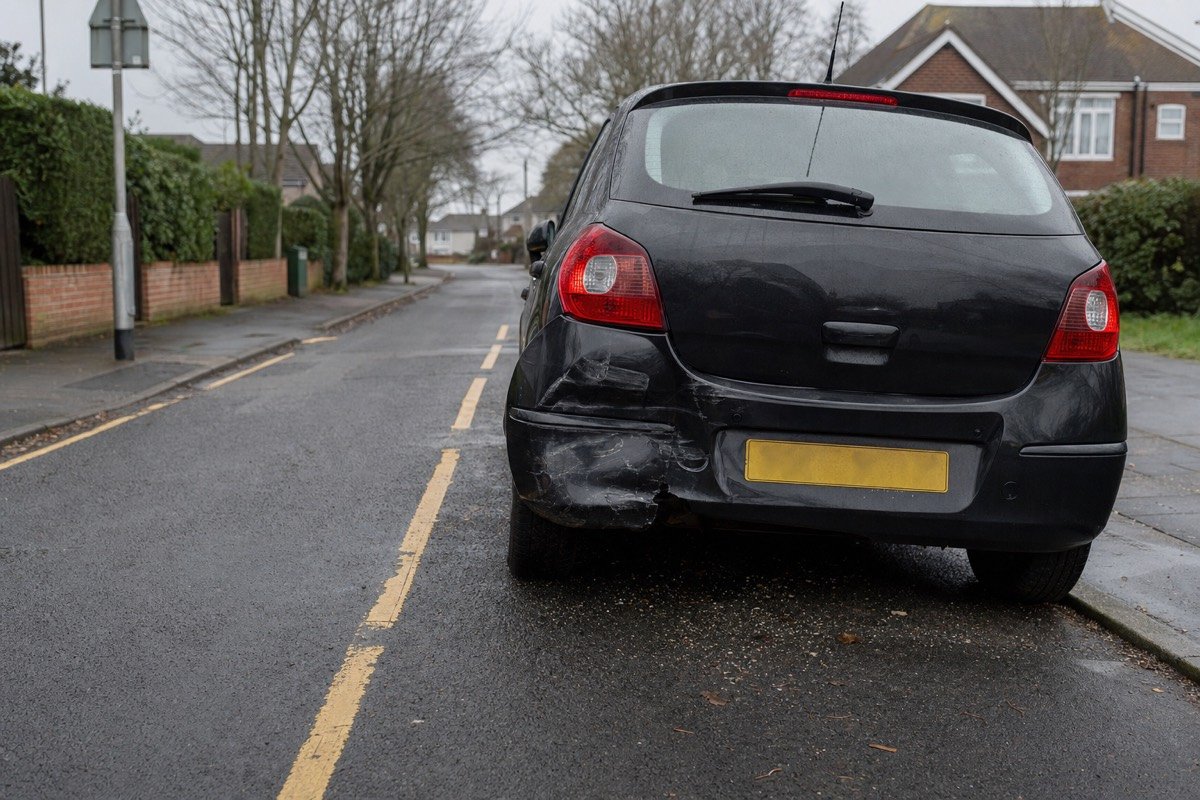
Police recorded 130,389 vehicle thefts in England and Wales in 2025 — a 27% increase from 2022. The overwhelming majority of stolen vehicles are taken without a key, using electronic attacks that the car's own security system cannot detect. Your car's immobiliser and alarm mean nothing when thieves are using the car's own software against it.
How Relay Attacks Work
Modern keyless entry cars constantly broadcast a low-power signal looking for your key fob. When the key is within range (typically 1–2 metres), the car unlocks and the engine can start. A relay attack exploits this by using two devices:
- One thief stands near your house (where your key fob sits in the hallway) and amplifies its signal.
- A second thief stands next to your car with a receiver. The car thinks the key is right there — unlocks and starts.
The entire process takes under 60 seconds on most vehicles. No alarms trigger. No windows are smashed. The car drives away completely normally. It registers as a legitimate start in the vehicle's on-board diagnostics.
Which Cars Are Most at Risk?
Any car with a keyless entry system is theoretically vulnerable. TRACKER, the stolen vehicle recovery company, regularly publishes its most-stolen list. Range Rover and Range Rover Sport have topped it for years. Toyota Land Cruiser, Mercedes C-Class, Ford Focus, and Hyundai Tucson also feature consistently. But the reality is that any keyless entry vehicle parked on a residential street in a major UK city is a target.
What Actually Stops Relay Attacks
Faraday Pouches (£5–15)
The simplest and most cost-effective solution. A Faraday pouch is a signal-blocking wallet that prevents your key fob from broadcasting. Store your keys in it at home and the relay amplifier picks up nothing. Test yours: put the fob in the pouch, stand next to your car and press the key — if the car doesn't respond, the pouch works. Many cheap pouches have failed seams and don't block properly.
Steering Wheel Lock
A physical deterrent. Even if thieves bypass the electronics, a visible steering wheel lock significantly increases the time and noise involved. Thieves target easy vehicles — a steering wheel lock often means they move to the next car.
Disabling Keyless Entry
Many manufacturers allow you to disable the keyless entry function (not the remote locking — just the passive "walk up and touch the handle" feature). Check your owner's manual. On some vehicles it requires a dealer visit. This eliminates relay attack vulnerability entirely.
Driveway Security Upgrades
CCTV cameras (dashcam parked mode, or dedicated home cameras) combined with a driveway post or bollard slow thieves significantly. Even if the car is taken, footage of the theft is valuable for recovery and prosecution.
GPS Tracker
Stolen vehicles with a GPS tracker are recovered at a dramatically higher rate. Thatcham-approved trackers (Category S5 or S7) notify you immediately if your vehicle moves unexpectedly and allow police to locate it in real time. Insurance companies often require one for high-risk vehicles. Subscription costs are typically £12–£25/month.
What to Do If Your Car Is Stolen
Call 999 immediately — a theft in progress is an emergency. If it's discovered later, call 101. Report to your insurer the same day; delays can complicate the claim. If your vehicle has a tracker, contact the tracker company directly — they have a dedicated response line and coordinate with police. Recovery rates for tracked vehicles approach 90%.
The relay attack epidemic is the direct, predictable consequence of manufacturers prioritising convenience over security. Until the industry standardises UWB (Ultra Wideband) technology — which makes relay attacks impossible by measuring precise key proximity — the Faraday pouch remains the most reliable £10 you can spend on your car.