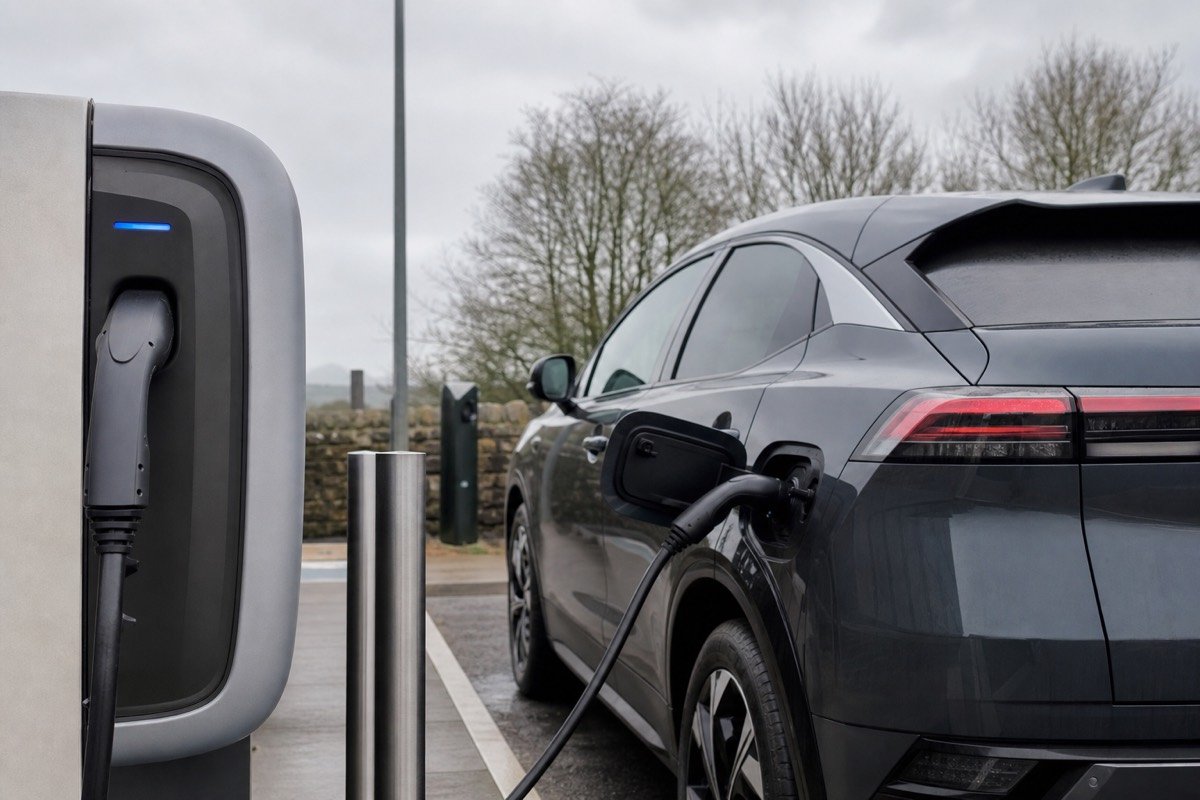
The UK crossed one million electric cars on its roads in mid-2025. The government's ZEV mandate requires that 80% of new car sales be electric by 2030 and 100% by 2035. The direction of travel is clear. But before you sign on the dotted line, there are things the showroom won't tell you — and they matter.
The Home Charging Question Comes First
This is the most important question: can you charge at home? If the answer is yes, owning an EV is transformative. You wake up every morning with a "full tank" costing around £3–5 using an overnight off-peak tariff. If the answer is no — you park on the street, in a flat without a dedicated space, or in shared parking — EV ownership is dramatically harder and the economics change completely.
A 7kW home wallbox (the standard home charger) costs £800–£1,200 installed. The OZEV grant currently provides up to £350 toward installation for eligible properties. A 7kW charger adds about 30 miles of range per hour — so overnight charging recovers the full range of most EVs comfortably.
Understanding Range: WLTP vs Reality
The official WLTP range figure on a manufacturer's spec sheet is measured under controlled laboratory conditions. Real-world range is typically 15–25% lower. In winter — with heating, lights, wipers, and cold battery chemistry — the reduction can be 30–40% on older EVs. A car quoted at 300 miles WLTP may deliver 210–230 miles in a typical UK December.
The practical rule: if you need a minimum daily range of X miles, buy an EV with a WLTP range of at least X × 1.4 miles.
Public Charging: The Honest State of Play
The UK now has over 60,000 public charging connectors. The headline sounds impressive. The reality is more nuanced:
- Motorway rapid chargers: generally reliable and growing, but peak holiday weekends still see queues at Tesla Superchargers and Gridserve/BP Pulse hubs.
- Destination chargers: in hotels, supermarkets, and car parks — slower (7–22kW), often free or cheap, great for topping up while you shop or sleep.
- On-street chargers: the patchy part. Reliability varies dramatically. Carry accounts (or apps) for multiple networks: Pod Point, Osprey, Ubitricity (lamp posts), BP Pulse, and Osprey cover most areas.
Use Zap-Map (zap-map.com) to check live charger status before planning any longer journey.
Costs: The Real Numbers
Home charging at 7p/kWh (off-peak, Octopus Go or similar): filling a 75kWh battery from empty costs £5.25. That's equivalent to about 3–4p per mile. A petrol equivalent costs 12–18p per mile at current prices.
Public rapid charging at 79p/kWh (a common mid-2026 rate at motorway chargers): that same 75kWh battery costs £59.25 to fill. At 250 miles, that's 24p per mile — more expensive than a modern diesel. If you regularly charge on the public network rather than at home, the economics narrow sharply.
Servicing costs: EVs have far fewer moving parts. No oil changes, no timing belt, no clutch. Annual servicing typically costs £100–£200 versus £300–£600 for a comparable petrol car.
Depreciation: The Uncomfortable Truth
Early EVs have depreciated heavily — some losing 50–60% of their value in three years. The market has stabilised as the used EV market has matured, but battery degradation, rapid technology development (newer models have much better range), and uncertainty about long-term battery health still push EV depreciation above equivalent petrol cars for many models. Check the residual value projections before buying new, and consider that a three-year-old EV can offer extraordinary value on the used market.
Which EV is Right for You?
For most UK buyers, the practical hierarchy is:
- Can charge at home, mostly short journeys: any EV works. Prioritise efficiency over range.
- Regular long-distance driving: range of 280+ miles WLTP, rapid charging at 100kW+ (150kW preferred). Tesla Model 3, Polestar 2, BMW iX3, Hyundai IONIQ 6.
- No home charging: consider a plug-in hybrid first. Full EV without home charging is workable but requires more planning than most buyers anticipate.
Tax and Incentives in 2026
Company car drivers: pure EVs attract 2% benefit-in-kind (BIK) tax versus 25–37% for equivalent petrol/diesel — a major financial incentive for company car drivers. Private buyers: no current purchase grant for cars (ended 2022), but zero road tax (VED) for EVs registered before April 2025; new EVs from April 2025 pay the £10 first-year rate, then standard VED from year two. The full exemption has ended, but VED remains significantly lower than for petrol equivalents.
The electric transition is real, and for the right driver — particularly those with home charging — it's genuinely better in almost every way. The key is going in with accurate expectations, not marketing copy.